

Introduction: What is SEO in Digital Marketing and Why it matters more than ever
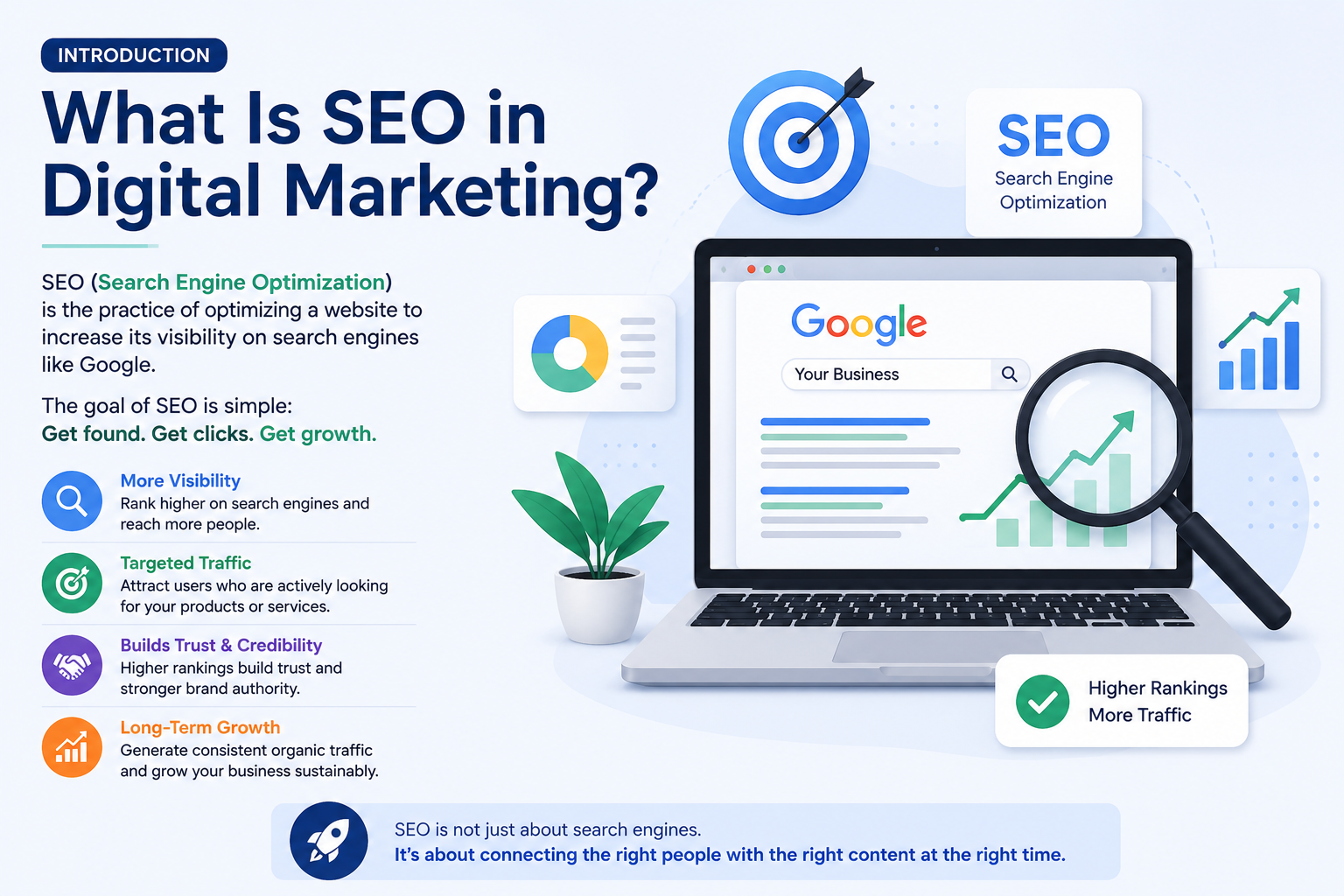
Imagine launching a beautiful website with valuable content, only to realize that no one can find it on Google. That’s where SEO in digital marketing becomes essential. Search Engine Optimization (SEO) is the process of improving a website’s visibility in search engine results, helping businesses attract relevant organic traffic without relying solely on paid advertisements.
In simple terms, the meaning of SEO in digital marketing is making your website easier for search engines like Google to discover, understand, and recommend to users searching for related information. Whether you’re a business owner, blogger, or aspiring digital marketer, understanding the SEO definition is the first step toward building a successful online presence.
The importance of SEO in digital marketing has grown significantly as billions of searches are performed every day. People turn to search engines to find products, services, answers, and solutions. If your website isn’t optimized, your competitors are more likely to capture those potential customers. That’s why understanding why SEO in digital marketing is important for business is no longer optional—it’s a fundamental part of every successful digital marketing strategy.
If you’re new to the concept, don’t worry. This guide covers the SEO in digital marketing basics for beginners, explains how SEO works, and shows how optimizing your website can improve visibility, build trust, and generate long-term organic traffic. By the end of this article, you’ll have a solid foundation to start your SEO journey with confidence. Want to learn SEO directly from Google? Google’s SEO Starter Guide provides official best practices for creating search-friendly websites.
SEO Explained: Breaking Down "Search Engine Optimization" in Simple Terms
What does SEO in Digital Marketing stand for?
SEO in Digital Marketing stands for Search Engine Optimization. It is the process of improving a website so that it appears higher in search engine results when users search for relevant keywords. The primary goal of SEO is to increase a website’s visibility, attract qualified organic traffic, and provide users with the most relevant information based on their search queries.
SEO involves optimizing various aspects of a website, including its content, technical performance, user experience, and authority. When implemented correctly, SEO helps search engines understand your website better and increases the likelihood of your pages appearing on the first page of search results. For example, if someone searches for “best digital marketing course in Bangalore,” Google displays the websites it considers most relevant and trustworthy. Websites that follow SEO best practices have a better chance of appearing higher in those results.
Types of SEO
Search Engine Optimization is a long-term digital marketing strategy that helps search engines discover, understand, and rank web pages. Unlike paid advertising, where businesses pay to appear in search results, SEO focuses on earning rankings naturally by creating valuable content and improving website quality.
SEO consists of several important areas:
- On-Page SEO: Optimizing content, headings, keywords, images, meta titles, and internal links.
- Off-Page SEO: Building website authority through backlinks, brand mentions, and digital PR.
- Technical SEO: Improving crawlability, site speed, mobile responsiveness, XML sitemaps, structured data, and website security.
- Local SEO: Optimizing a business for location-based searches such as “restaurants near me.”
Together, these practices improve search visibility and provide a better experience for both users and search engines.
How Search Engines Work?
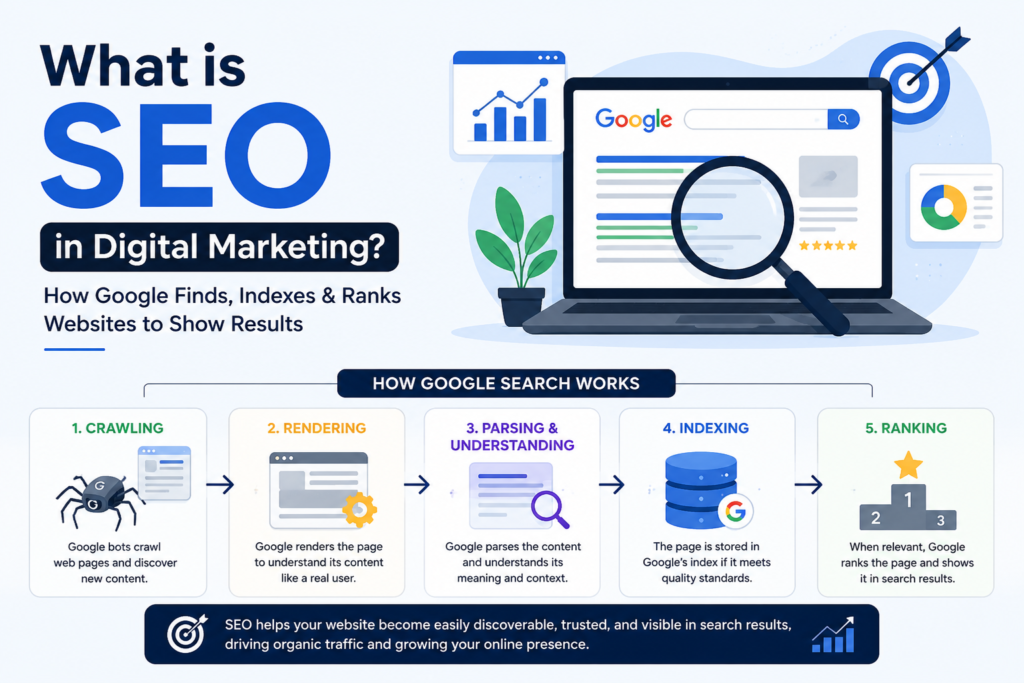
Search engines such as Google use automated programs called web crawlers or bots to discover and organize billions of web pages on the internet. Their goal is to provide users with the most relevant, accurate, and helpful information. Google follows a five-step process before displaying your website in search results.
Step 1: Crawling
Googlebot discovers web pages by following links from one page to another or by reading XML sitemaps submitted by website owners. During crawling, Google identifies new pages and checks existing pages for updates. If a page cannot be crawled because of issues such as robots.txt restrictions, broken links, or server errors, Google may not process it further.
Step 2: Rendering
Many modern websites use JavaScript to load content. During rendering, Google loads the webpage just like a browser would to see the complete page, including dynamic content, images, menus, and interactive elements. Rendering helps Google understand content that isn’t immediately visible in the HTML source code.
Step 3: Parsing and Understanding
After rendering, Google analyzes the webpage to understand its content and context. It identifies:
- Page title
- Headings
- Main content
- Images and alt text
- Internal links
- Structured data
- Keywords
- Overall topic of the page
Google uses advanced AI systems to determine what the page is about instead of simply counting keywords.
Step 4: Indexing
If the page meets Google’s quality standards, it is stored in Google’s massive database called the Google Index. Indexing means Google has saved information about your page and can now consider showing it in search results. Not every crawled page gets indexed. Duplicate content, poor-quality pages, or pages blocked with noindex may be excluded.
Step 5: Ranking
When a user performs a search, Google compares millions of indexed pages and determines which ones best answer the user’s query. Google evaluates hundreds of ranking factors, including:
- Content relevance
- Search intent
- Website authority
- Content quality
- Mobile friendliness
- Core Web Vitals
- HTTPS security
- Page speed
- User experience
- Backlinks
The pages that best satisfy the user’s intent appear higher in the search results. To understand Google’s crawling and indexing process in more detail, refer to Google’s official Crawling and Indexing Documentation.